

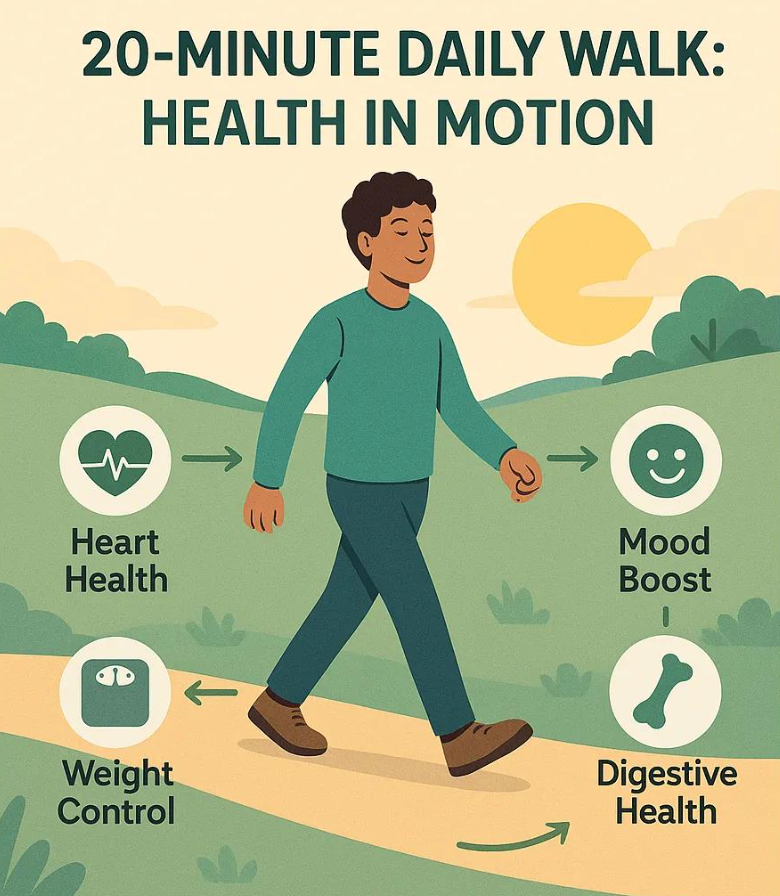
The Ultimate Healthy Daily Routine: A Beginner's Guide to Feeling Your Best Every Day
📖 10 min read🌱 Beginner-friendly⏱ Evergreen content
Introduction: Why Your Daily Routine Is the Foundation of a Healthy Life
Have you ever looked at someone who seems to have it all together — calm, energetic, glowing — and wondered, “What’s their secret?”
Spoiler: it’s rarely one big dramatic change. It’s a collection of small, consistent daily habits that quietly build up over time.
The truth is, your daily routine is your health. What you do every morning, how you move your body, what you eat, how you unwind at night — these small decisions compound into the quality of your life.
If you’re a beginner, the good news is this: you don’t need to overhaul your entire life overnight. This guide will walk you through a practical, science-backed daily routine that’s easy to follow, flexible enough for real life, and powerful enough to actually change how you feel.
Let’s get into it.
🌅 Morning Routine (6:00 AM – 9:00 AM): Start Strong
1. Wake Up at a Consistent Time (Even on Weekends)
One of the most underrated health habits is simply waking up at the same time every day. Your body runs on a circadian rhythm — a 24-hour internal clock that regulates sleep, hormones, digestion, and energy.
When you wake up at wildly different times, you throw that clock off balance. The result? Brain fog, sluggishness, and poor sleep quality.
Action Step: Set a consistent wake-up time and stick to it for 21 days. Even if you go to bed late, get up at your set time. Your sleep schedule will naturally adjust.
2. Don’t Touch Your Phone for the First 30 Minutes
This one feels impossible — and that’s exactly why it matters.
The first 30 minutes of your day set the mental tone for everything that follows. Scrolling social media or checking emails the moment you wake up floods your brain with stress, comparison, and reactive thinking.
Instead, give yourself a sacred 30-minute window each morning that belongs only to you.
Action Step: Place your phone across the room before bed. Use those first 30 minutes for something intentional — stretching, journaling, or simply sitting quietly with a glass of water.
3. Hydrate Before You Caffeinate
After 7–8 hours of sleep, your body is mildly dehydrated. Yet most people reach for coffee before drinking a single sip of water.
Starting with 16–20 oz (500–600 ml) of water jumpstarts your metabolism, flushes out toxins, improves brain function, and prepares your digestive system for the day.
Action Step: Keep a water bottle or glass on your nightstand. Drink it before you do anything else. Add a slice of lemon for an extra vitamin C boost.
4. Move Your Body Within the First Hour
You don’t need a full gym session. Even 10–20 minutes of movement in the morning dramatically improves your mood, energy, and focus throughout the day.
Morning exercise boosts endorphins (your “feel-good” chemicals), increases blood flow to the brain, and builds self-discipline — because if you’ve already done something hard before 8 AM, the rest of the day feels easier.
Options for beginners:
- A brisk 15-minute walk outside
- A YouTube yoga or stretching routine
- 3 sets of bodyweight exercises (squats, push-ups, planks)
Action Step: Pick one movement activity that you actually enjoy and commit to it for the next week.
5. Eat a Nourishing Breakfast (or Fast Intentionally)
Breakfast has been the subject of much debate, but here’s what the science says: what matters most is the quality of your food, not just the timing.
If you eat breakfast, focus on protein and healthy fats — eggs, Greek yogurt, oats with nuts, or a smoothie with greens. These stabilize blood sugar, reduce cravings, and fuel sustained energy.
If you practice intermittent fasting, that’s perfectly valid too — just break your fast with something nutritious when you do eat.
What to avoid: Sugary cereals, pastries, and processed juices that spike your blood sugar and leave you crashing by mid-morning.
☀️ Midday Routine (9:00 AM – 1:00 PM): Stay Sharp and Focused
6. Work in Focused Blocks, Not Marathons
The human brain isn’t designed for 4-hour unbroken work sessions. Research on productivity consistently shows that focused sprints followed by short breaks lead to better performance, creativity, and lower stress.
The Pomodoro Technique is a great starting point: work for 25 minutes, rest for 5, repeat. After 4 cycles, take a longer 20–30 minute break.
Action Step: Download a Pomodoro timer app (Forest, Be Focused) or use a simple kitchen timer.
7. Eat a Balanced Lunch — And Actually Stop Working to Eat It
Lunch is often the most neglected meal of the day. People either skip it, eat fast food, or mindlessly scroll their phone while eating at their desk.
Mindful eating — actually sitting down, savoring your food, and eating slowly — improves digestion, reduces overeating, and gives your mind a genuine break.
A balanced lunch formula:
- 50% vegetables (salad, roasted veggies, soup)
- 25% protein (chicken, fish, lentils, tofu, eggs)
- 25% complex carbs (brown rice, quinoa, sweet potato)
- A drizzle of healthy fat (olive oil, avocado)
8. Take a 10-Minute Walk After Lunch
A short post-lunch walk does something remarkable: it lowers blood sugar spikes after eating, reduces the afternoon energy crash, aids digestion, and clears mental fog.
Studies show that even a 10-minute walk after meals significantly improves blood glucose control — making it one of the highest-ROI health habits you can build.
Action Step: Make a rule: always walk for at least 10 minutes after lunch. Even if it’s just around your building.
🌤️ Afternoon Routine (1:00 PM – 6:00 PM): Beat the Slump
9. Manage the Afternoon Energy Dip Wisely
Almost everyone experiences an energy dip between 2–4 PM. This is a natural biological phenomenon tied to your circadian rhythm — not a sign of weakness or laziness.
The wrong approach: Reaching for sugary snacks or your third coffee of the day.
The right approach: A brief 10–20 minute nap (if possible), some light stretching, or a short walk.
If you do drink coffee, stop caffeine intake by 2 PM so it doesn’t disrupt your sleep later.
10. Stay Hydrated Throughout the Day
Most adults walk around mildly dehydrated without even knowing it. Dehydration causes fatigue, difficulty concentrating, headaches, and mood changes — symptoms we often mistake for stress or burnout.
How much water do you need? A general rule: drink about 8 glasses (2 liters) per day, but adjust based on your body size, climate, and activity level.
Action Step: Keep a large water bottle at your desk. Set reminders on your phone every hour to take a few sips.
11. Include a Meaningful Break — Especially if You Work from Home
Working from home has blurred the lines between work and personal life. Without intentional breaks, burnout creeps in quietly.
Schedule at least one genuine break in the afternoon that doesn’t involve screens — read a physical book, do light stretching, have tea while sitting on your balcony, or chat with a friend.
This isn’t laziness. It’s recovery — and recovery is what makes sustained performance possible.
🌙 Evening Routine (6:00 PM – 10:00 PM): Wind Down Right
12. Cook at Home More Often Than You Think You Need To
Cooking your own meals doesn’t require being a chef. It just means you know what’s in your food.
Restaurant meals and takeout are often loaded with excess salt, sugar, unhealthy oils, and hidden calories. Cooking at home gives you control over your ingredients and is one of the most powerful long-term investments in your health.
Start simple. Learn 5–7 basic healthy recipes you actually enjoy. Rotate them throughout the week.
13. Unplug and Decompress After 8 PM
The hour before bed is crucial. What you do in this window directly affects your sleep quality, and sleep quality affects everything — weight, immunity, mood, focus, longevity.
Create a wind-down ritual:
- Dim the lights in your home
- Stop screens (TV, phone) at least 60 minutes before bed
- Read a physical book
- Take a warm shower or bath
- Do 5–10 minutes of gentle stretching or deep breathing
Why screens hurt sleep: Blue light from screens suppresses melatonin (your sleep hormone), making your brain think it’s still daytime.
14. Reflect, Journal, or Practice Gratitude
Before bed, take 5 minutes to write down three things:
- Something that went well today (no matter how small)
- Something you’re grateful for
- One intention for tomorrow
This simple practice has been shown to reduce anxiety, improve sleep, and shift your mindset toward positivity over time. It takes less than 5 minutes and costs nothing.
15. Prioritize 7–9 Hours of Quality Sleep
Sleep is not a luxury. It is a biological necessity — and arguably the single most important pillar of your health.
During sleep, your brain consolidates memories, your body repairs muscle tissue, your immune system recharges, and your hormones reset. Skimping on sleep, even by 1–2 hours, impairs cognitive function as much as being legally drunk.
Tips for better sleep:
- Keep your bedroom cool (65–68°F / 18–20°C)
- Use blackout curtains or an eye mask
- Avoid alcohol within 3 hours of bed
- Don’t eat heavy meals within 2–3 hours of bedtime
- Establish a consistent bedtime
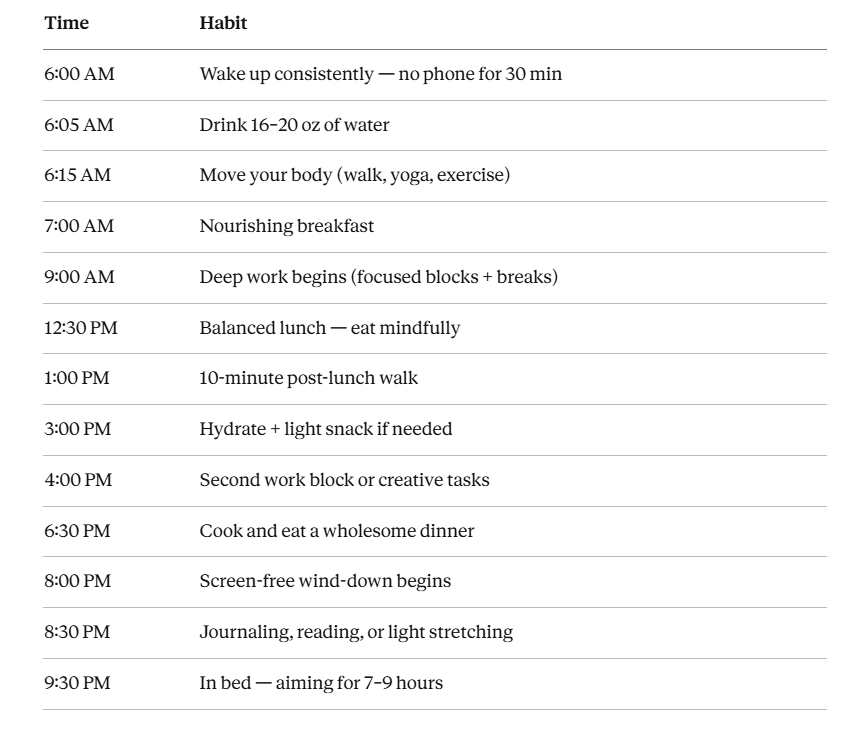
📋 Your Complete Healthy Daily Routine at a Glance
The Most Important Thing to Remember
No routine is perfect. Life happens — you’ll miss days, sleep in, skip workouts, and eat pizza at midnight. That’s completely normal.
The goal isn’t perfection. The goal is consistency over time. Even if you implement just 3 or 4 of these habits, you will feel a difference within a few weeks.
Start where you are. Use what you have. Do what you can.
One small step today is infinitely better than a perfect plan you never start.
Frequently Asked Questions (FAQs)
Q: Do I have to follow this routine exactly?
No! Treat this as a flexible framework. Adjust the times and activities to fit your life, job, and personal preferences.
Q: How long before I see results?
Most people notice improvements in energy and mood within 1–2 weeks. Deeper changes in weight, sleep, and mental health typically emerge over 4–8 weeks of consistency.
Q: What if I’m not a morning person?
That’s okay. The core principles apply regardless of when you wake up. The key is structure, not the specific time.
Q: Can I follow this routine if I work night shifts?
Absolutely. Simply shift the morning/evening labels to your actual wake-up and bedtime windows. The habits themselves are time-agnostic.
Final Thoughts
A healthy lifestyle isn’t built in a single day — it’s built in the quiet, ordinary moments you choose wisely, day after day.
The daily routine above isn’t a perfect prescription. It’s a starting point — a proven framework built on sleep science, nutrition research, and behavioral psychology. Adapt it, make it yours, and most importantly, start today.
Because the best routine is the one you’ll actually follow.
Found this helpful? Save it, share it with someone who needs it, and come back to it whenever you need a reset. Your future self will thank you.
Tags: healthy daily routine, morning routine for beginners, healthy lifestyle tips, daily habits for health, how to build a daily routine, wellness routine, healthy habits 2024, beginner health routine, sleep and wellness, mindful living